Jenny’s unsent letter to William
American WomanJenny’s unsent letter to William is both a declaration of love and a record of a separation Jenny has not explained to him. Its carefully written prison address, its brief appearance in Rob Frazer’s glove compartment, and its eventual place unopened on Jenny’s nightstand give the letter a small but consequential role: it makes her private attachment tangible at the moment when danger and urgency threaten to turn it into something she must surrender.
Address, Contents, and Intended Recipient
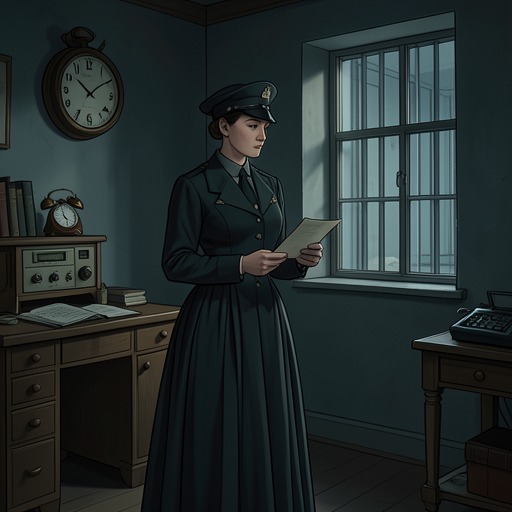
The letter is directed to William, who is in prison; Jenny has carefully printed the prison address on its envelope. Its contents acknowledge a long silence and insist that the silence does not mean love has ended. As Jenny looks at it, the message takes shape in the words that she loves him very much, even though he has not received an answer from her in a long time. The letter therefore carries two facts together: her feeling persists, but communication between them has broken down.
The envelope’s appearance does not resolve that break. Jenny experiences its appeal as a bluff and a lie, language that suggests how inadequate the written assurance feels beside the unaddressed fact of her absence. She has not told William where she is or what she is doing. The declaration can say that there is a reason for the silence, but it does not deliver that reason to him; as an unsent letter, it remains a one-sided communication rather than an exchange.
From the Glove Compartment to Jenny’s Hand
The letter is first seen in Rob Frazer’s brown coupe, still inside the glove compartment. When Jenny leans through the passenger window and opens the compartment, she finds it there and pulls it out to look at it. The detail makes the letter more than an inward thought: it is a retained object, present amid the immediate arrangements involving Frazer, Alan, and the people at the house. Jenny’s attention turns from the encounter around her to this piece of mail and the intimate history it represents.
Frazer admits that he had forgotten the letter was in the compartment and asks Jenny to give it to him as he rushes to the car. The request arrives amid a rapidly worsening confrontation. Juan has demanded money, and Yvonne has searched Frazer’s pockets and found only ten dollars. Jenny, rather than passing the letter back, holds the envelope and reads it. Its physical particulars sharpen the hesitation: it is warm and dry, and the careful prison address looks pitiful to her. The letter is close enough to touch, but handing it over would mean relinquishing it at precisely the moment its words expose what she has kept unsaid.
Refusal in the Moment of Danger
Jenny cannot bear to return the letter to Frazer. Her refusal is brief, and he may not hear it. Juan fires a shot into the air; Frazer accelerates away, leaving chunks of turf flying. The letter does not cause the confrontation, and the scene does not establish what Frazer would have done with it. But its place within the action is exact: when asked to hand it over, Jenny keeps it, while the gunshot and hurried departure abruptly end the possibility of resolving the request.
That interruption gives the letter a different weight from an ordinary piece of correspondence. It has been carried along in the car without Jenny’s attention, then suddenly becomes something she must consciously choose whether to release. Her refusal does not send it to William or make their silence less real. Instead, it preserves the envelope in her possession as the scene breaks apart around her.
The Unopened Envelope and Its Significance
Afterward, Jenny lies upstairs in bed, curled beneath the sheets and unable to settle. The unopened envelope lies on the nightstand. Below her, voices rise and fall and water runs; she hears footsteps and the back door, but at first ignores them. Her bodily tension grows rather than easing, and she understands the fear tightening around her ribs. In that state, the letter’s presence is not comfort: it joins her unspoken connection to William with a newly felt danger.
Jenny thinks that, although she never told William her location or what she was doing, the unsent letter makes her feel newly exposed and lost. She imagines herself setting out into the mountains without telling anyone and only then realizing that nobody would know to look for her. The comparison links the private failure to communicate with the practical vulnerability of her hidden life, without suggesting that William knows where she is. The envelope remains unopened beside her while the car departs and the household continues around her. Its final position preserves the unresolved contradiction at the center of the object: Jenny has written love to William, but the letter has not crossed the distance between them.